

Research vessel
Equipment and Infrastructure Utilization
For the Act4D-Eutrophication specific project, key equipment and infrastructure were deployed to support field research, monitoring, modeling, and pilot testing activities on sweet-water lakes and coastal waters.
Ovidius University of Constanta Research Vessel – OVIDIUS
Manufacturer: PARKER Poland
Model/Type: Parker 920 MAX
Description
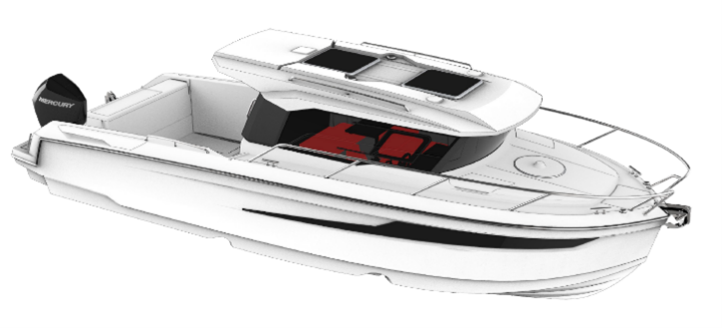
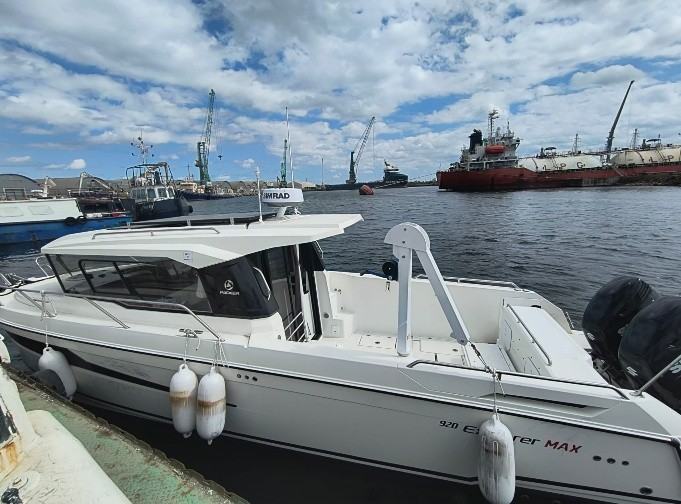
The Parker 920 Explorer MAX is a modern offshore pilothouse boat designed for practical marine activities. Built by Parker Poland, the model combines Scandinavian-style functionality with high-performance hull engineering, making it suitable for demanding sea conditions while still offering comfort during cruising.
Classified under CE Category B, the Parker 920 Explorer MAX is certified for offshore navigation in winds up to Beaufort Force 8 and waves up to 4 meters, with capacity for up to 8 passengers under Class B certification. The boat can also carry up to 10 passengers under CE Category C conditions.
The vessel has an overall length (LOA) of 10.4 meters and a beam of 2.8 meters, offering a stable and spacious platform on the water. Its twin-step deep-V hull design improves fuel efficiency, increases comfort in rough seas, and reduces the planing threshold, allowing smoother acceleration and better offshore handling.
One of the most distinctive features of the Parker 920 MAX is its exceptionally large aft deck. Measuring approximately 5.3 square meters, the deck is significantly larger than those found on most competing pilothouse boats in this category. The modular cockpit layout allows owners to configure the space for a variety of activities.
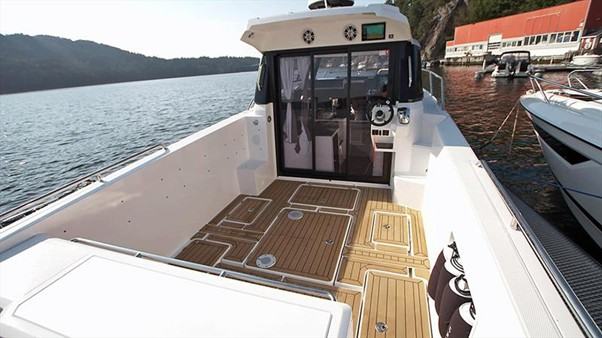
Inside, the enclosed pilothouse offers protection from weather while maintaining excellent visibility. The cabin is equipped for overnight stays, including sleeping accommodation for up to 4 persons, freshwater systems, heating during winter conditions and a soft-top roof option for open-air cruising during warmer weather. This dual-purpose design makes the boat suitable for professional-style marine activities.
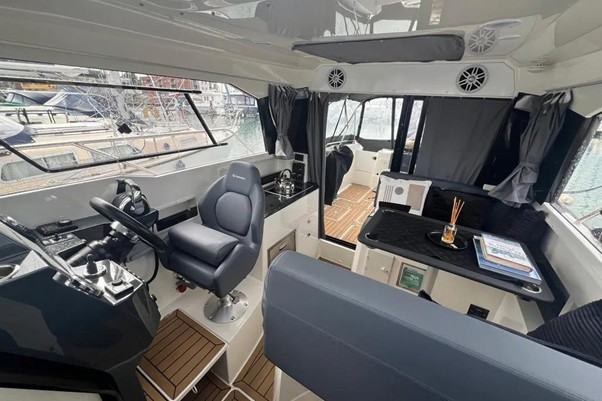
The Parker 920 Explorer MAX is equipped with two Suzuki 250 HP, four-stroke outboard (DF250), with reported top speeds exceeding 40 knots depending on configuration and load. Fuel capacity is 460 liters with the optional secondary tank, enabling long-range cruising capability.
Overall, the Parker 920 Explorer MAX is considered a versatile offshore pilothouse vessel that successfully balances comfort, practicality, and performance. Its CE Class B certification, spacious working deck, and adaptable modular design make it an attractive option for boaters seeking a capable all-weather cruiser with strong offshore credentials.
Key figures
- Modern pilothouse motorboat combining cruising comfort with practical utility for scientific research.
- Enclosed fore cabin with sleeping berths, kitchen, table, and bathroom, supporting multi-day trips (at least two days).
- Large aft deck (2.5 × 2.2 m) for equipment and material loading.
- Equipped with a manual 120 kg portable crane for lifting/lowering equipment into the water.
Main Technical Characteristics
- Total Length: 9.95 meters
- Width: 2.80 meters
- Maximum Draught (with engines): 0.8 meters
- Design Category: B (Beaufort 8) – up to 8 people
- Suitable for recreational maritime navigation up to 50 nautical miles offshore.
- Designed for offshore voyages with winds up to Beaufort scale 8 and waves up to 4 m.
- Navigation Area: M/3 (up to 24 nm from coast), extendable to M/2 (up to 50 nm from shelters)
- Engines: 2 × Suzuki 250 HP, four-stroke outboard (DF250)
- Dual Overhead Camshaft (DOHC), 24 valves, V6, 4028 cm³ cylinder capacity
- EFI Injection fuel system
- Maximum Speed: 55 knots
Usage in Project
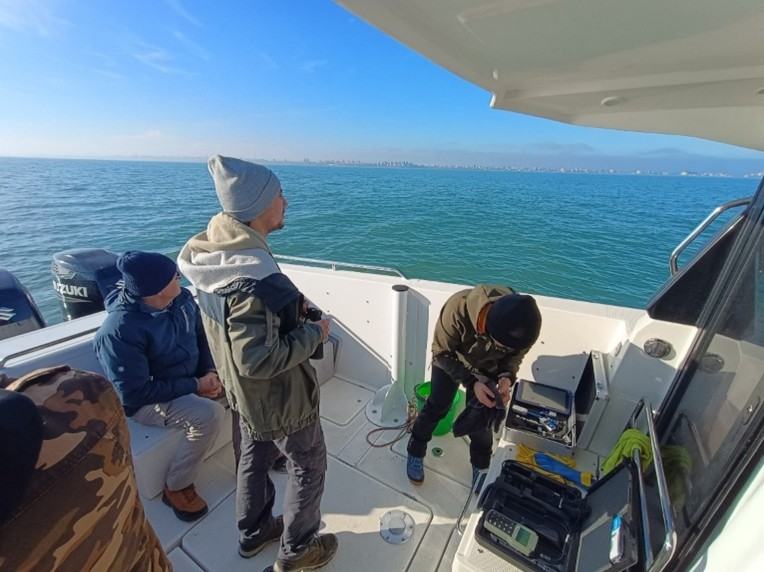
- Conducted field sampling, water quality measurements, and monitoring campaigns on Siutghiol Lake, Bicaz Lake, and Black Sea West Coast waters.
- Supported deployment of sensors, experimental platforms, and instruments for eutrophication monitoring.
- Enabled verification of computational models and co-creation activities with local stakeholders.
Impact on Project
The OVIDIUS vessel provided a flexible, safe, and fully equipped platform for on-site research, allowing the consortium to collect high-quality environmental data, validate methodologies, and implement pilot testing while ensuring compliance with the project’s objectives for climate resilience, biodiversity enhancement, and eutrophication mitigation.